
Project Coordinator
Dr. Le Van Hinh
Responsible for overall project governance and serving as the primary liaison between the project and the sponsoring organizations.
The Feminist Legal Theory Project at the University of Economics and Law (UEL) is a multi-year academic initiative dedicated to advancing feminist jurisprudence in Vietnam. Since its launch in 2021, with the support of the Rosa Luxemburg Stiftung Hanoi Office (RLS), the project has introduced feminist legal theory into Vietnamese legal education, research, and professional dialogue, helping to expand legal discourse beyond formal equality toward more substantive understandings of gender justice.
Over time, the project has developed through conferences, workshops, student-focused activities, and publications, creating a growing platform for scholarly exchange and capacity building.
Its major activities have included the International Conference on Feminism, Gender and Law (ICFGL), feminist judgment workshops, publication projects, and, in 2026, a strategic shift toward more applied and institutional forms of impact through the Gender Justice Moot Court, ICFGL 2026 on Feminist Law-making and Judgments, and an international academic study mission to Germany.

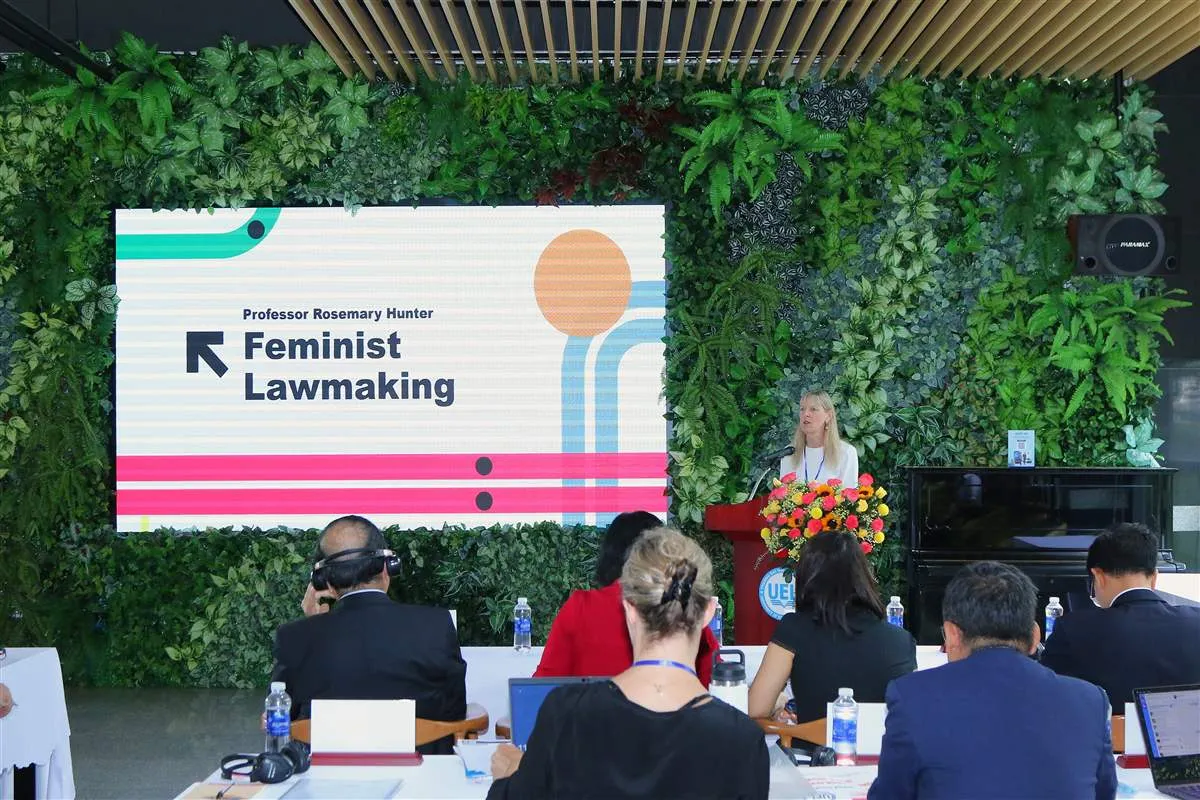



The next phase of the project (2027-2030) will build on these foundations by moving toward a more practice-oriented, policy-relevant, and public-facing agenda.
Its strategy includes sustaining the ICFGL as a recurring academic forum, institutionalising the Gender Justice Moot Court, producing policy-oriented outputs, and developing a bilingual digital platform on gender equality and law as a long-term repository, teaching resource, and public knowledge hub linked to UEL’s Law and Technology bachelor programme.

Promote the understanding and application of Feminist Legal Theory in Vietnam.
Integrate feminist perspectives into legal education, research, and practice.
Foster a dynamic academic community through dialogue, collaboration, and knowledge exchange.
Support the development of gender-responsive legal frameworks and social justice.
Integrating theory and practice: Linking feminist legal theory with real-world legal issues through teaching, research, and applied activities.
Interdisciplinary and critical: Engaging diverse perspectives to examine law in its broader social and institutional context.
Collaborative and international: Building networks among scholars, practitioners, and institutions in Vietnam and beyond.
Capacity-building oriented: Supporting students and researchers to develop skills in gender-sensitive legal analysis and advocacy.
We focus on advancing Feminist Legal Theory in Vietnam through research, teaching, academic dialogue, and collaborative initiatives. It brings together scholars, students, and practitioners to develop feminist legal scholarship, strengthen gender-sensitive legal education, and promote more inclusive and socially responsive approaches to law.
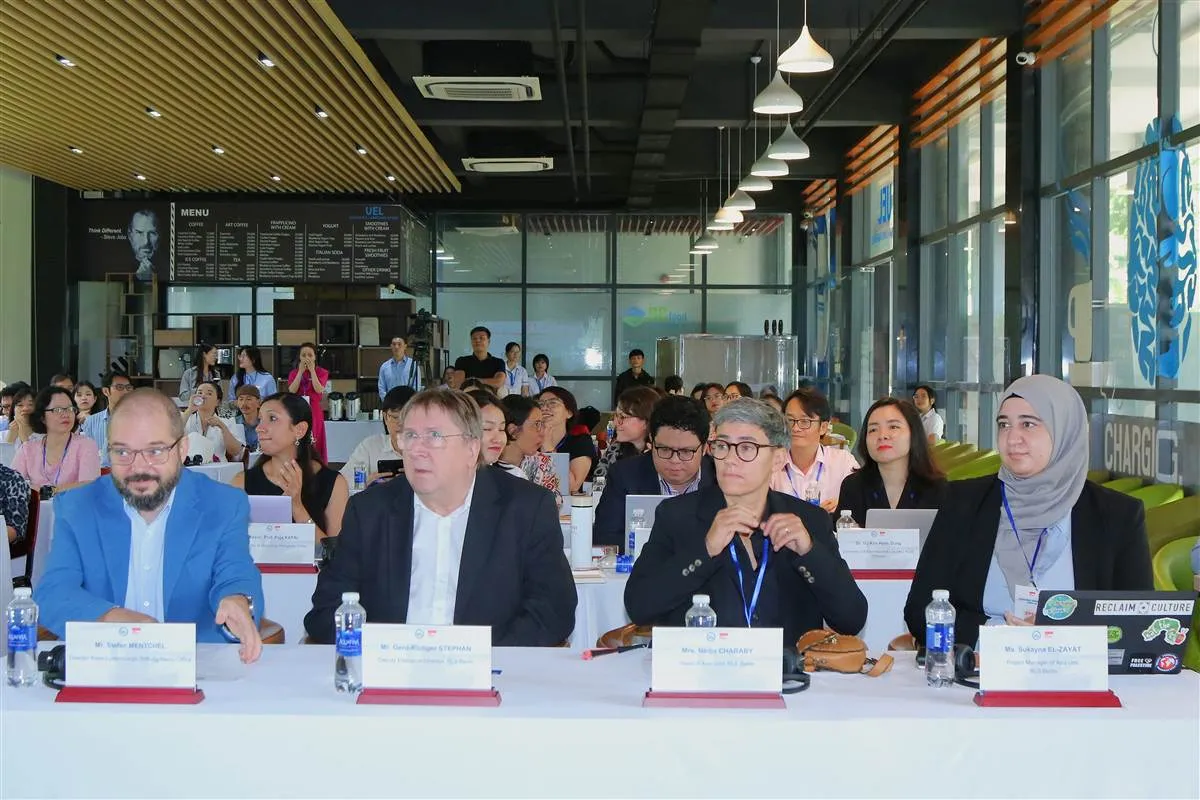
Forums gather practitioners and researchers for intensive dialogue on methodology, case selection, and the politics of legal reform in contexts where feminist theory still meets institutional resistance.

Through the selection and rewriting of judgments, contributing authors offer alternative interpretations of the law, highlighting the role of gender, women's experiences, and broader social factors in judicial reasoning and legal application.
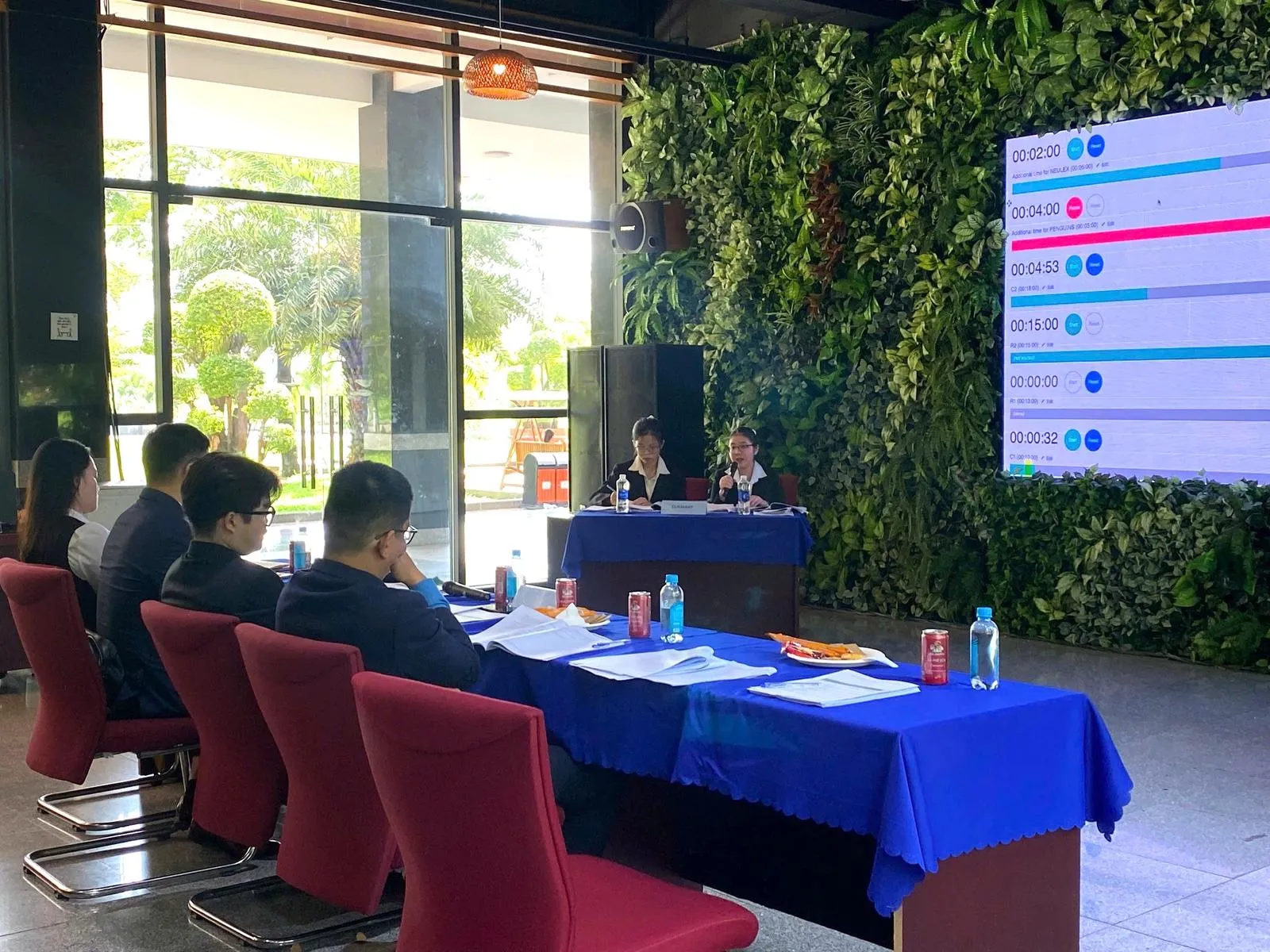
Through a hybrid E-Court model combining virtual hearings and a live Grand Finale, the programme equips law students with practical, digital, and analytical competencies for modern legal practice.
The Rosa Luxemburg Stiftung (RLS) and the University of Economics and Law (UEL) have established a long-term academic partnership aimed at introducing and institutionalizing Feminist Legal Theory in Vietnam.
RLS plays a central role as an international partner and funding institution, providing financial support, academic exchange opportunities, and strategic guidance. Through its commitment to social justice, political education, and international solidarity, RLS facilitates connections between Vietnamese scholars and global feminist legal scholarship.
The UEL team serves as the core academic driver of the project, leading its design, implementation, and long-term development. UEL lecturers and researchers, as project members, are responsible for developing academic content, integrating Feminist Legal Theory into legal education and research, and organizing the project’s key scholarly activities.
The project is guided by a managing team responsible for academic leadership, institutional coordination, financial stewardship, and day-to-day administration. Together, they ensure that the project develops with intellectual rigor, operational continuity, and long-term strategic direction.
Project Coordinator
Responsible for overall project governance and serving as the primary liaison between the project and the sponsoring organizations.

Project Director
Responsible for the conceptual design and implementation of the project’s research, framework development, and core activities.

Financial Manager
Responsible for fiscal oversight, budget planning, and ensuring all project expenditures align with financial compliance and reporting standards.

Project Administrator
Responsible for the management of administrative operations, logistical coordination, and supporting the day-to-day execution of project tasks.